Lab-Grown vs. Natural Diamonds: Assessing Investment Value in 2026
Lab-grown and natural diamonds should not be treated as interchangeable investments. Both can be valued as jewellery, but an attractive purchase price, a grading report and a profitable resale are different things. For buyers in 2026, the useful comparison is between the cost of ownership, evidence of demand and realistic selling options.
Quick Market Comparison: Natural vs. Lab-Grown Diamonds
| Feature | Natural diamonds | Lab-grown diamonds |
|---|---|---|
| Origin | Formed through natural geological processes. | Grown using processes such as CVD or HPHT; diamonds, not diamond simulants. |
| Resale assessment | Requires a stone-specific offer. No universal percentage of the retail price is assured. | Requires an actual buyer and offer. Do not equate a retailer’s upgrade credit with cash resale value. |
| 2026 market evidence | De Beers reported a 16% year-on-year fall in its average rough price index in H1. | Edahn Golan reported a 13% annual decline in the Q2 wholesale index, with variation by size. |
| Environmental assessment | Ask for evidence about the specific mine and supply chain. | Ask for evidence about production energy and the specific supply chain. |
| Buying priority | Origin, quality, provenance, price and a realistic route to resale. | Appearance, quality, purchase price and clear written sales terms. |
The two price indicators above cover different markets. Rough natural stones and polished laboratory-grown stones are not directly comparable products, and neither index measures a consumer’s resale return.
What the 2026 Price Data Actually Shows
Lab-grown diamonds: falling prices, uneven changes
Edahn Golan’s Q2 2026 analysis, published on 7 July, reported a 13% year-on-year decline in its lab-grown wholesale price index. One-carat round stones rose 1%, while two-carat stones fell 20%. This is more informative than assuming that every size loses value at the same rate.
The series tracks trade transactions, including IGI-certified goods in Mumbai and Surat, rather than consumer buyback offers. Expanding production and price competition can make jewellery more affordable while also weakening the case for buying a stone solely for appreciation. That is a purchasing consideration, not a forecast of any individual diamond’s future price.
Natural diamonds: rarity does not remove market risk
In its 30 July 2026 results, De Beers reported that its average rough diamond price index declined 16% year on year in the first half. Its average realised price fell 32% to $105 per carat, reflecting both pricing and a shift towards lower-value goods. De Beers is a natural-diamond producer reporting on its own business, not a neutral valuation service for retail jewellery.
These results do not determine the value of a particular polished stone. They do show why a broad claim that natural diamonds preserve capital or automatically hedge inflation needs evidence. Geological rarity alone cannot guarantee a buyer, a selling deadline or a profitable exit.
Resale Value: Separate the Stone, the Setting and the Selling Costs
There is no reliable universal resale percentage for an unspecified diamond. A meaningful estimate needs the stone’s identity and quality, its condition, the purchase price and a proposed selling channel. A jewellery item also includes a setting and workmanship; an offer for a loose stone is not an offer for the complete piece.
For either origin, request more than one written cash offer and compare the amount you would receive after fees. Keep trade-in credit, an insurance replacement estimate and an immediate purchase offer separate. Each answers a different question.
Do not assume a lab-grown diamond has zero resale value without checking actual offers. Equally, do not assume that a natural diamond will retain 60–85% of its purchase price. Exceptional stones and provenance should be assessed individually rather than used to predict the performance of ordinary engagement jewellery.
For a broader comparison of asset characteristics, see our Gold vs. Diamonds: 2026 Outlook. Before treating any jewellery purchase as an investment, establish the proposed exit price, all costs and the risk that a sale takes longer than expected.
Advanced Gemology: Identity Is Different from Value
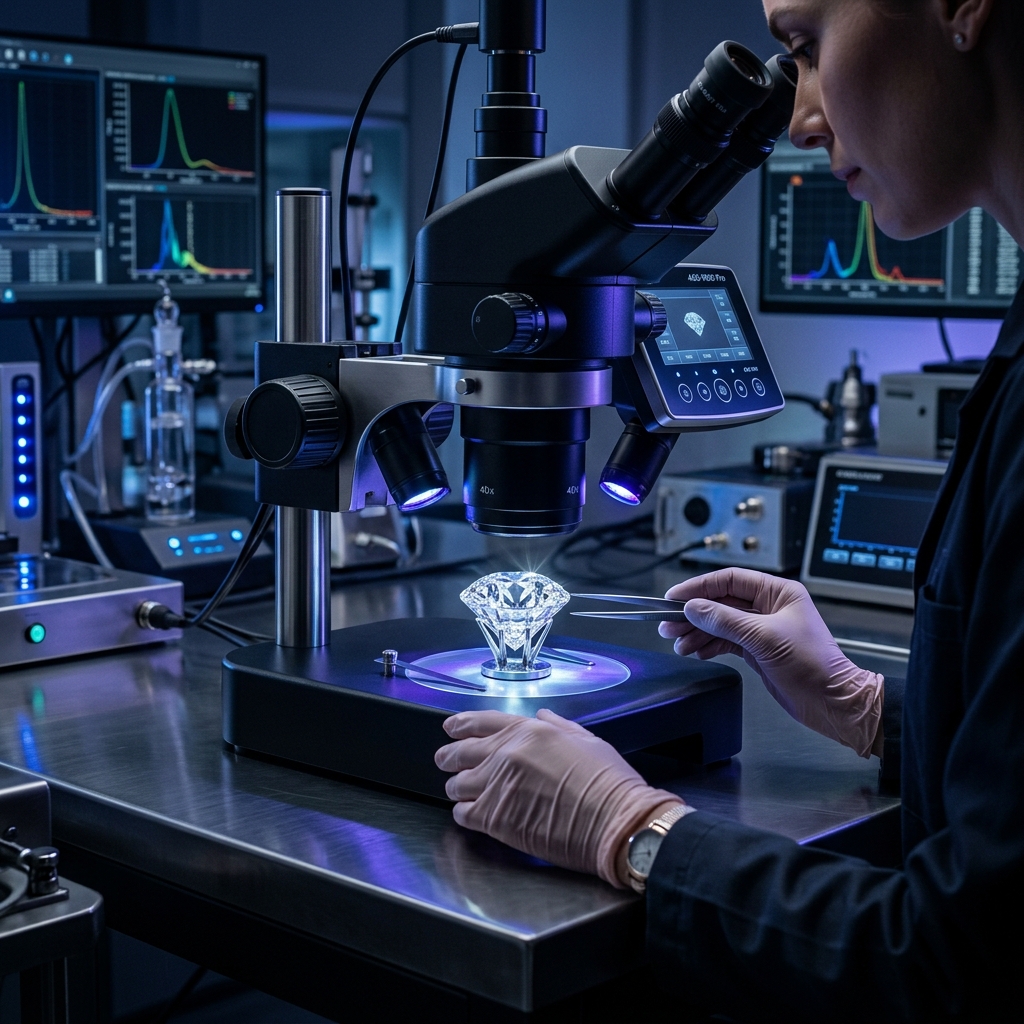
Laboratory-grown diamonds are diamonds; they should not be confused with simulants such as cubic zirconia. CVD means chemical vapour deposition, while HPHT means high pressure, high temperature. GIA’s identification research describes how growth features and spectroscopic evidence help laboratories distinguish origins. An unaided visual inspection is not a substitute for appropriate testing.
A laboratory report records characteristics or an assessment; it is not a promise of financial performance. GIA’s buyer’s guide explicitly separates its reports from appraisals. Buyers should verify the report and match it to the stone, then obtain a separate price assessment. Our guide to diamond screening and laboratory methods explains the identification context.
Sustainable Luxury Requires Specific Evidence
Neither “natural” nor “lab-grown” establishes the environmental impact of a finished piece by itself. Ask about production energy, traceability and what stages an environmental assessment covers. Comparisons should use consistent boundaries rather than a general label such as “ethical” or “eco-friendly”.
The FTC’s guidance on diamond advertising calls for substantiated, properly qualified environmental claims. A seller should explain the specific benefit and its evidence. Origin disclosure and environmental performance are separate questions, and neither establishes investment value.
How to Choose in 2026
For jewellery to wear, compare appearance, budget, durability and the seller’s terms. For a purchase motivated by resale, start with independent offers and the total cost of ownership. Lab-grown stones can offer an accessible jewellery option, while natural stones may appeal for origin and provenance. Neither category should be presented as a guaranteed store of wealth.
Sources and Method
This analysis was reviewed on 17 October 2026. It uses dated wholesale and producer data, gemological research and consumer guidance. The market figures refer to Q2 or H1 2026, not full-year results or a live appraisal. Purchasing observations are editorial analysis; no future returns are projected.